Good headphones make transcription easier. They help you hear every word clearly, block out distractions, and stay comfortable through long sessions. Whether you work as a legal transcriptionist or a court reporter, the right pair can directly improve your accuracy and speed.
This guide covers the best headphones for transcription at every price point, including a dedicated section for court reporters who have specific needs that most headphone reviews never address.
What Court Reporters Need in Headphones
Court reporters have different requirements than general transcriptionists. The work happens in real time, sessions run for hours, and the audio environment in a courtroom or deposition suite is unpredictable. Here is what matters most.
Speech clarity comes first. You need to isolate individual voices cleanly, even when people talk over each other or when audio quality from a recording is poor. A flat, accurate sound profile works better than headphones tuned for music, which tend to boost bass in ways that muddy spoken word.
Passive noise isolation matters more than active noise cancellation (ANC) for court work. ANC is designed to block steady background noise like airplane engines or HVAC systems. In a courtroom, the noise you need to block is irregular — chairs moving, papers shuffling, side conversations. A tight physical seal around the ear handles that better than electronics.
Wired connections are generally preferred for real-time work. Wireless headphones can introduce small audio delays, which throws off rhythm when you are working with transcription software or FTR Player. Wired also means no battery to manage mid-deposition.
Comfort over long sessions cannot be overlooked. Depositions and trials can run all day. Headphones that feel fine for 30 minutes often become painful after four hours. Look for well-padded ear cups, a light headband, and a design that does not clamp too tightly.
How to Choose Good Headphones for Transcription
The right choice depends on your work environment and how you use them. If you transcribe in a quiet home office, most closed-back headphones will serve you well. If you work in a noisy office or review recordings in a busy environment, you need stronger isolation. Court reporters doing live work should prioritize wired connections and passive isolation. Someone doing review work from recorded audio has more flexibility.
Price is worth thinking about carefully. The difference between a $40 pair and a $130 pair is meaningful for transcription work. The difference between $130 and $450 is mostly comfort and brand preference. You do not need to spend a lot to get accurate, clear sound.
Bose QuietComfort 35 II: Best for Studio-Quality Audio
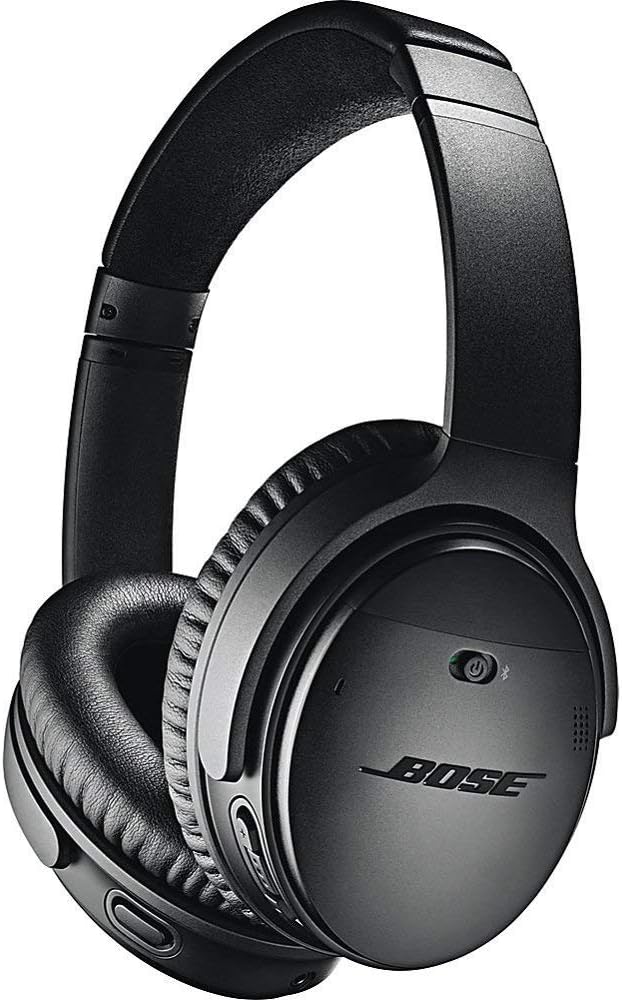
The Bose QC35 II is one of the most popular wireless headphones on the market, and for good reason. The noise cancellation is excellent — you can dial it up or down to match your environment. Battery life runs about 20 hours, which covers a full workday. The cushions are soft and the overall weight is light for an over-ear design.
For transcriptionists working in open offices or busy environments, the QC35 II is hard to beat. The sound skews a little bass-heavy, which can slightly soften the crispness of speech, but most users find it more than adequate for transcription work.
For court reporters doing real-time stenography, the wireless design and bass-forward sound make other options a better fit. These are best used for review sessions rather than live proceedings.
Pros: excellent noise cancellation, long battery life, comfortable all-day wear, corrosion-resistant materials.
Cons: premium price, requires the Bose Connect app for some features, sound can feel too bass-heavy for detailed speech work.
Price: $186
Audio-Technica ATH-M50x: Best for Engineers and Audio Professionals
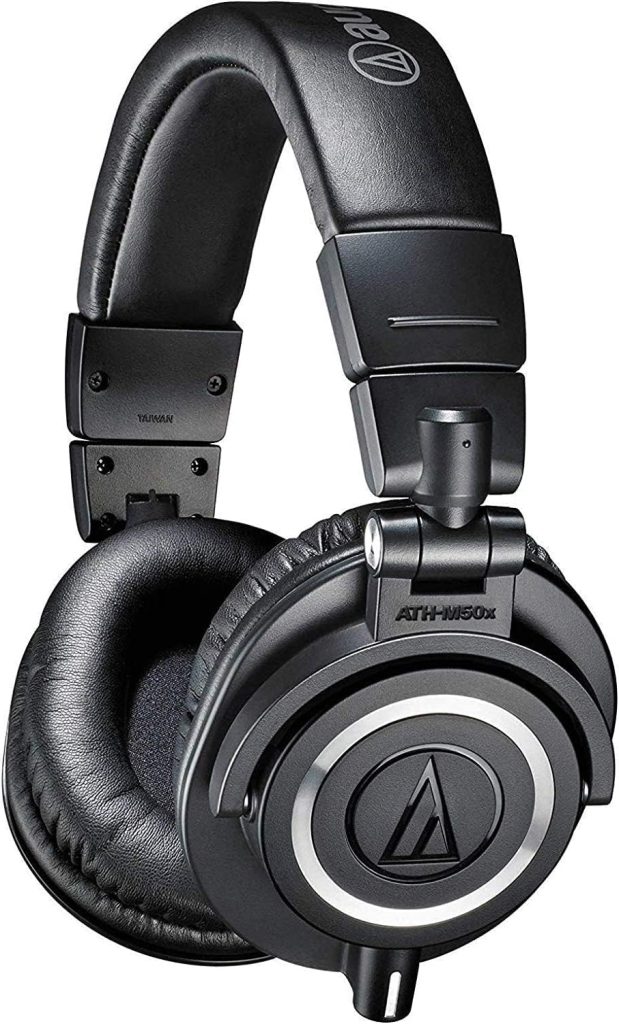
The ATH-M50x is a staple in recording studios and broadcast booths, and it translates extremely well to legal transcription. The sound is flat and accurate — voices come through exactly as they are, without the extra bass or artificial brightness you get from consumer headphones. That accuracy is exactly what you want when you are trying to catch every syllable.
The cables are detachable, which is useful if a cable wears out over time. The headphones fold up for travel. An optional Bluetooth adapter is available if you occasionally want to go wireless for review sessions.
Court reporters consistently rank the ATH-M50x among their top picks. The passive isolation is strong, the sound profile is honest, and the build holds up through years of daily use. These are a smart long-term investment for anyone doing serious transcription work.
Pros: flat, accurate sound ideal for speech, detachable cables, sturdy build, optional Bluetooth.
Cons: larger and heavier than some options, fit can vary depending on head size.
Price: $149
Sony MDR-7506: Best for Professionals
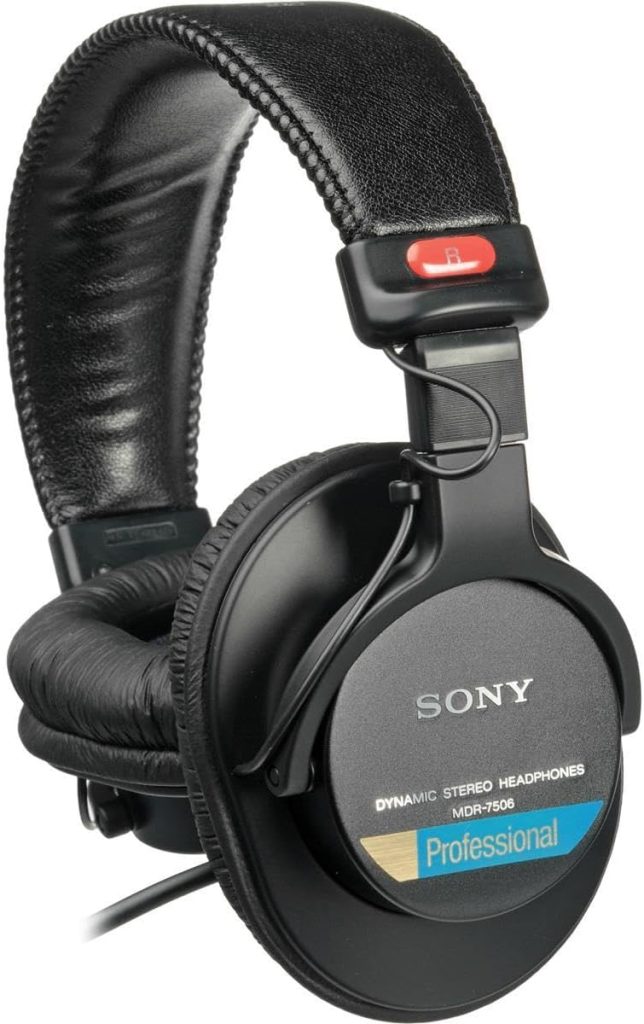
The Sony MDR-7506 has been a broadcast and studio standard for over 30 years. That track record exists for a reason. The sound is detailed and precise, the build is tough metal construction, and the price is reasonable for the quality you get.
These fold up compactly and come with a long coiled cable that reaches audio equipment without tangling. The ear cups provide solid passive isolation, cutting background noise without any electronics involved. They work reliably with every device, every piece of software, every setup.
Among court reporters, the MDR-7506 is one of the most commonly recommended headphones. It handles deposition playback and audio review exceptionally well. The coiled cable is heavier than a straight cable and can feel awkward if you move around a lot, but for seated transcription work it is a non-issue.
Pros: extremely accurate sound, durable metal build, folds for travel, reliable passive isolation.
Cons: coiled cable is heavy and non-detachable, can feel tight on larger heads over long sessions.
Price: $130
Apple AirPods Max: Best for Seamless Integration with Apple Devices
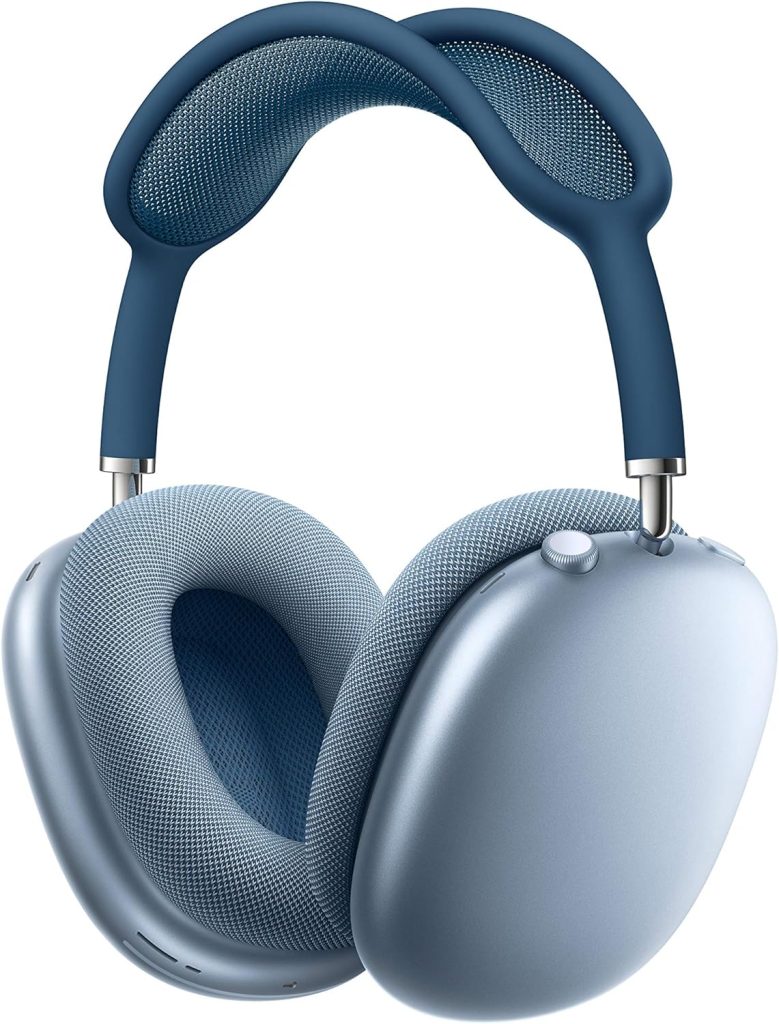
The AirPods Max sound great and the noise cancellation is among the best available. If you work on a Mac and want a seamless, premium wireless experience, they deliver. Pairing is instant, the controls are intuitive, and the audio quality is genuinely excellent.
That said, the price is steep and the wireless-only design limits their usefulness for serious transcription workflows. They are also heavier than they look, which some users notice during long sessions. For general transcriptionists who use Apple devices and want a premium all-in-one option, they are worth considering. For court reporters, the cost and wireless dependency make the Sony or Audio-Technica a smarter choice.
Pros: outstanding sound quality, best-in-class noise cancellation, seamless Apple integration, comfortable and stylish.
Cons: $449 price tag, heavy, wireless only, limited usefulness outside the Apple ecosystem.
Price: $449
ECS WordMaster: Best for Medical and Legal Professionals on a Budget
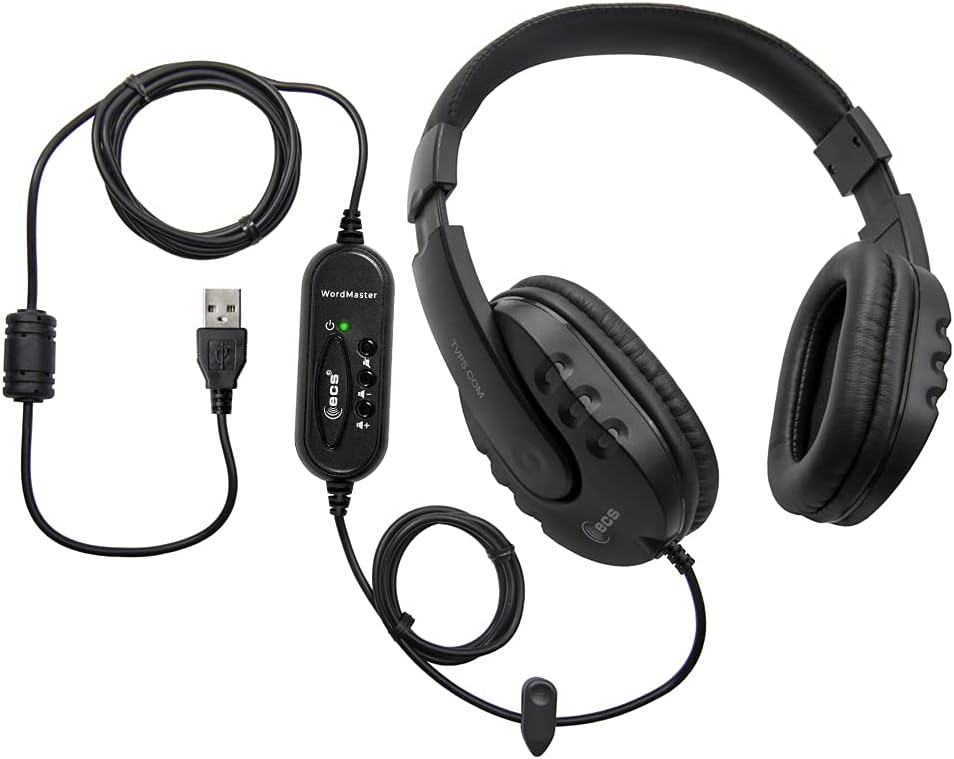
The ECS WordMaster was built specifically for transcription work, and it shows. The USB connection bypasses your computer’s built-in audio card entirely, which often produces cleaner sound than a standard headphone jack. It is plug-and-play on both Windows and Mac, and it stays clear and intelligible even at high volumes.
At under $40, it is the most affordable option on this list by a wide margin. Court reporters and legal transcriptionists in office settings use it regularly for audio review and playback. The fit is a bit loose, which some people find comfortable and others find annoying. It is not meant for live courtroom work, but for reviewing recordings and producing transcripts it does exactly what you need it to do.
Pros: purpose-built for transcription, clean USB audio, compatible with Windows and Mac, very affordable.
Cons: loose fit may slip, not ideal for high-noise environments or live proceedings.
Price: $39.95
Sennheiser Professional HD 280 PRO: Best for Musicians
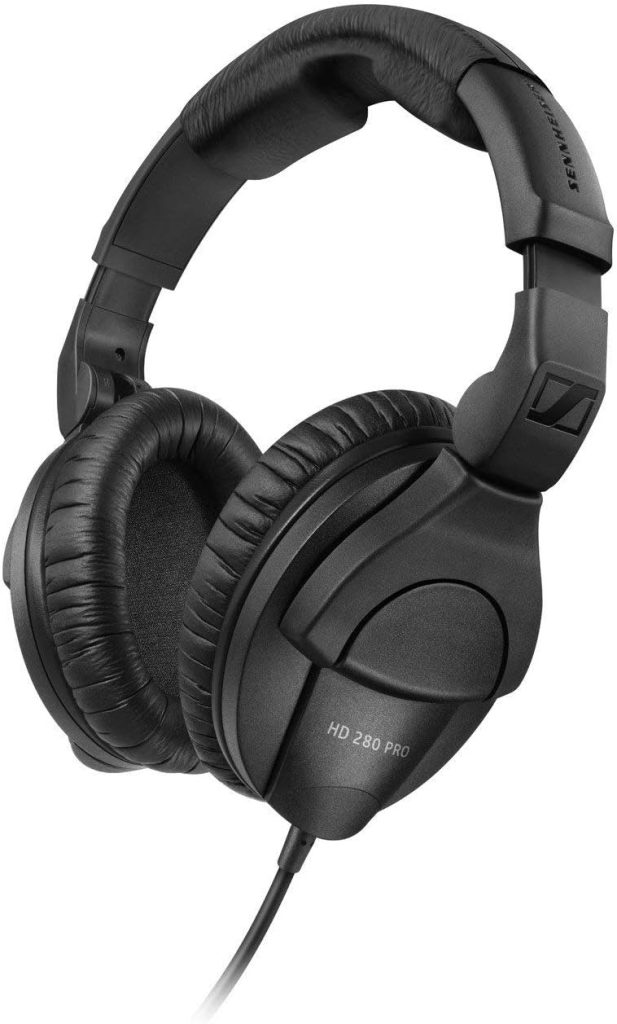
The Sennheiser HD 280 PRO blocks up to 32 decibels of outside noise passively — no electronics, no battery required. That is a meaningful amount of isolation for a wired closed-back headphone. The ear cups rotate for a better fit and the whole unit folds up compactly.
The sound is accurate without being harsh. It is not quite as detailed as the Sony MDR-7506 at the top end, but it is a solid performer at a fair price. For transcriptionists who work in moderately noisy environments and want reliable passive isolation without spending $130 or more, the HD 280 PRO is a strong choice.
Pros: 32dB passive noise isolation, lightweight and foldable, accurate sound, affordable.
Cons: cable is not detachable, no active noise cancellation, bass isolation is weaker than mid and high frequencies.
Price: $99.95
AKG K72 Studio Headphones: Best for People With Tight Budgets
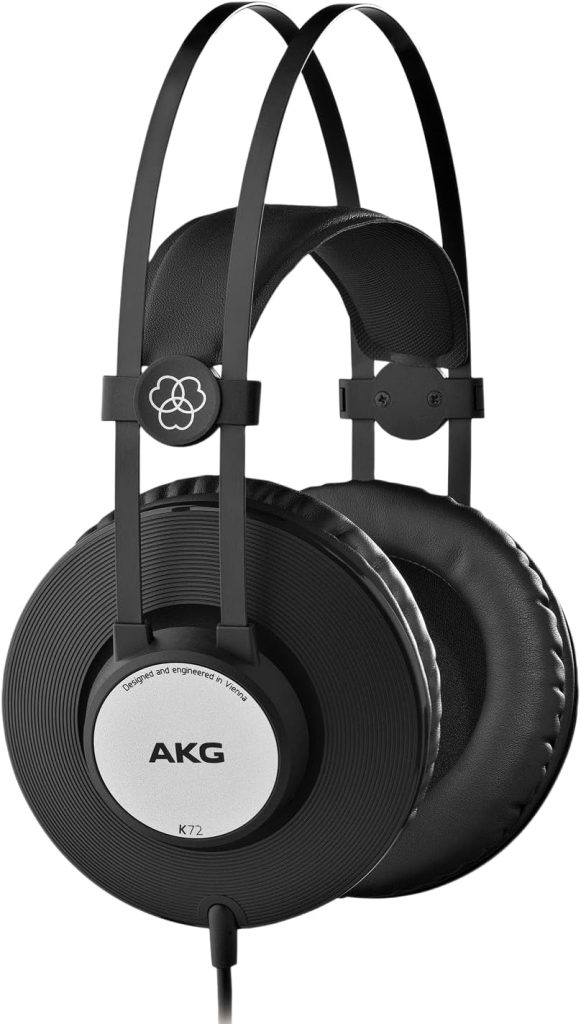
The AKG K72 is a closed-back studio headphone that costs around $65. The sound is decent for the price, the ear pads are breathable and comfortable, and the closed-back design delivers sound directly into your ears without much leakage. It is a reasonable starting point for someone new to transcription who does not want to spend much.
It is not the most durable headphone on this list and the mid-range response is weaker than the options above it. If budget allows, the ECS WordMaster at $40 is purpose-built for transcription and actually a better fit for the work. But if you already have the K72 or find it on sale, it will get the job done.
Pros: affordable, closed-back design, breathable ear pads, decent sound for casual transcription.
Cons: weaker mid-range, less durable than higher-end options, mediocre isolation compared to studio-grade alternatives.
Price: $65
The Right Headphones for Your Work
For most court reporters and legal transcriptionists, the Sony MDR-7506 and Audio-Technica ATH-M50x are the two best options. Both have the flat, detailed sound that transcription demands, strong passive isolation, and builds that hold up for years. If budget is the primary concern, the ECS WordMaster at $40 is a surprisingly capable tool for office-based review work.
Good headphones are just one part of a well-equipped transcription setup. If you are building out your workstation, also take a look at the best foot pedals for transcription, the best keyboards for transcriptionists, and if you are a court reporter working on the go, the best laptops for court reporters. Pairing the right hardware with software like Express Scribe or FTR Player will make a noticeable difference in how fast and accurately you work.
FAQ
The Sony MDR-7506 and Audio-Technica ATH-M50x are the top picks for court reporters. Both offer accurate, flat sound and strong passive isolation. For budget office use, the ECS WordMaster USB is a popular choice in law offices and court reporting firms.
Not necessarily special, but the right type matters. You want a closed-back design with a flat, accurate sound — not headphones tuned for music. Consumer headphones often boost bass in a way that makes speech harder to parse. Studio or monitoring headphones tend to serve transcription work much better.
Wireless headphones work well for reviewing recorded audio. For real-time court reporting work, wired is generally better — there is no latency, no battery to manage, and no risk of a dropped connection mid-session.
Clear audio means fewer mistakes and less time rewinding. When you can hear every syllable without straining, you transcribe faster and more accurately. If you want to improve your transcription speed and accuracy, headphones are one of the first things worth upgrading.
Active noise cancellation (ANC) uses electronics to generate sound waves that cancel out background noise. It works best against steady, consistent sounds like engines or air conditioning. Passive isolation is simply the physical seal of the ear cup blocking sound. For transcription in office or courtroom environments, passive isolation is often more practical.