
Court reporters sit for a living. Six, eight, ten hours a day — hunched over a steno machine, tracking every word. The wrong chair doesn’t just cause discomfort, it causes injuries that end careers. The right one pays for itself in productivity and longevity.
We tested and reviewed the four best chairs for court reporters based on what actually matters for this profession: lumbar support during long stationary sessions, seat height range that works alongside a steno machine, and build quality that holds up to daily use for years.
Bottom line up front: If budget isn’t the constraint, buy the Herman Miller Aeron. If you need something purpose-built for court reporting, the Soma Court Reporter Chair is the most specialized option on this list.
How Your Body Should Be Positioned at a Steno Machine
Before spending money on a chair, understand what you’re optimizing for. Court reporters have different ergonomic demands than standard office workers — your steno machine sits low and close to your body, your wrists rest on your thighs, and you remain largely stationary for long stretches. Your chair needs to support that specific posture.
- Seat height: Feet flat on the floor, 90-degree bend at the knees. This distributes weight evenly and reduces lower back pressure.
- Lumbar support: Your lower back should make contact with the chair’s lumbar support. No gap, no slouching forward.
- Shoulders: Relaxed and level — not pulled up toward your ears. Tension here travels up the neck fast during long sessions.
- Head and spine: Aligned, looking straight ahead. Even a small forward tilt compounds over hours.
- Armrests: Optional for court reporters — many prefer to remove them entirely so arms can hang naturally at the sides while working the steno machine.
Read more about steno machine setup in our in-depth stenography machines guide.
Now let’s get into our recommendations.
1. Herman Miller Aeron
The Aeron is the benchmark every other ergonomic chair is measured against, and for good reason. Its PostureFit SL system supports both the sacrum and lumbar simultaneously — most chairs support one or the other. The mesh back adapts to your body rather than pushing against it, which matters when you’re sitting still for hours at a time rather than shifting around.
It’s expensive. It’s worth it. Court reporters who switch to the Aeron consistently report less lower back pain within weeks. The chair is also built to last 10–12 years with normal use, which makes the per-year cost more reasonable than it looks at first glance.
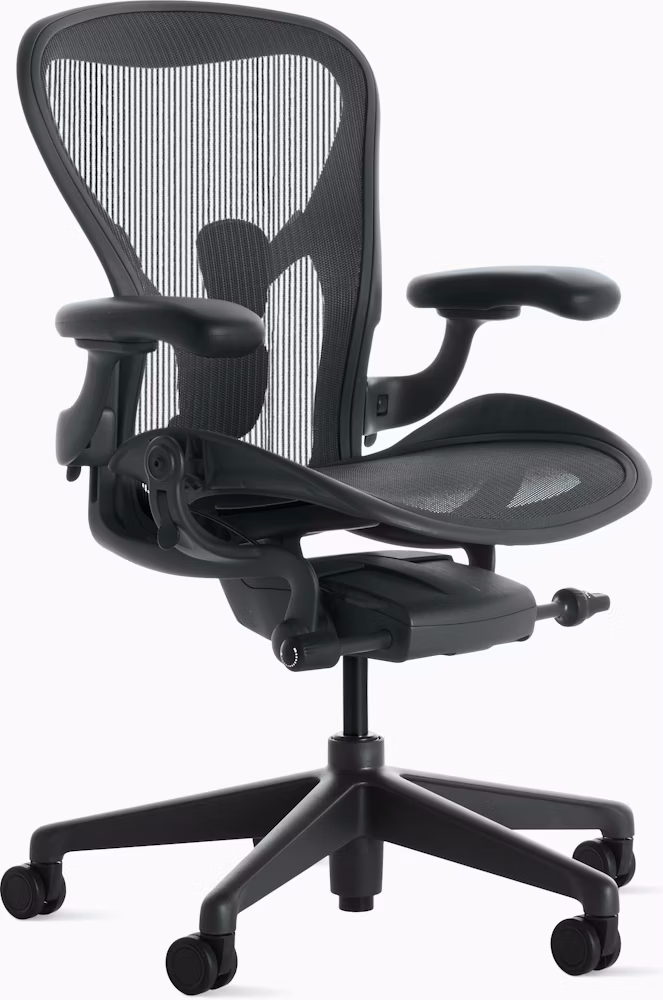
- Lumbar support: PostureFit SL — supports sacrum and lumbar simultaneously
- Seat height: 16 to 20.5 inches
- Adjustability: Armrest height and width, tilt tension, recline, forward tilt
- Best for: Court reporters working full-time who want to stop thinking about their chair
Price: Starting at $1,400 — Check price on Amazon →
2. Steelcase Gesture
The Gesture is the right choice if your day involves more than just steno work — if you’re moving between a laptop, a second monitor, a phone, and your machine. Its arm design moves with your body rather than fighting it, and the back adjusts continuously to support whatever position you’re in at any given moment.
It’s slightly more expensive than the Aeron and offers a wider seat height range, making it a better fit for taller reporters or those with non-standard desk setups. Build quality matches the Herman Miller — this chair will outlast most of the furniture around it.
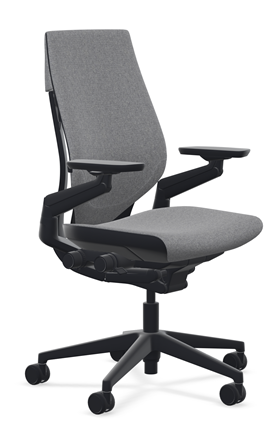
- Lumbar support: Continuous LiveBack technology adapts to every position
- Seat height: 16 to 21 inches
- Adjustability: Seat depth, recline, arm width, arm height, tilt tension
- Best for: Reporters who do more than just steno throughout the day
Price: Starting at $1,640 — Check price on Amazon →
3. Soma Court Reporter Chair
The Soma is the only chair on this list designed specifically for court reporters. While the Aeron and Gesture are excellent general ergonomic chairs adapted well to this profession, the Soma was built around the steno machine workflow from the ground up — lower seat height range, a seat pan that accommodates machine positioning, and back support calibrated for the stationary posture court reporting demands.
If you’ve tried high-end general ergonomic chairs and still struggle with comfort during long proceedings, the Soma is worth the price. It won’t win on brand recognition, but it might win where it matters most.
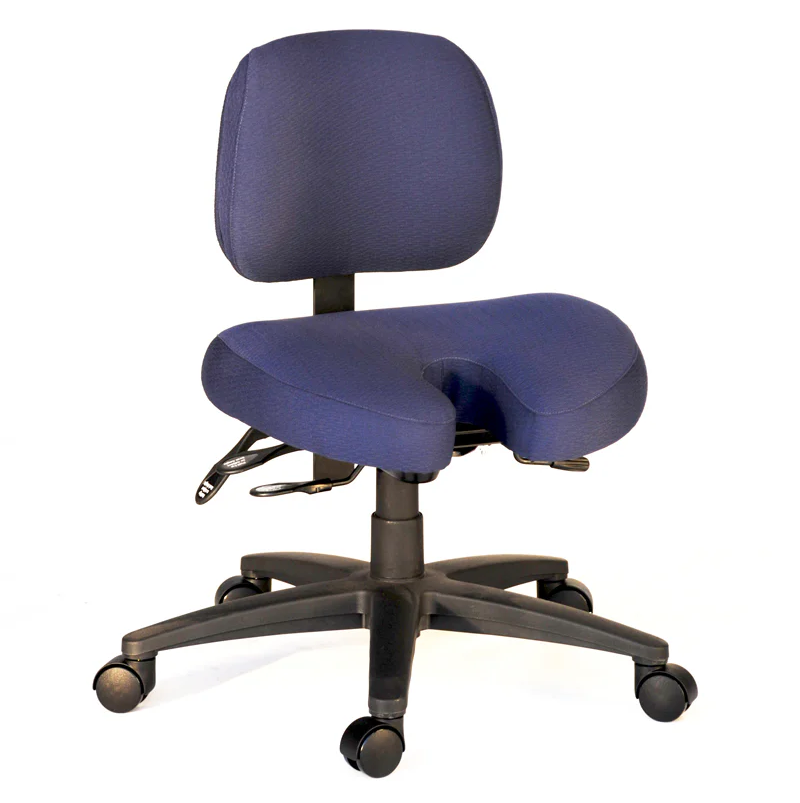
- Lumbar support: Adjustable, calibrated for stationary court reporting posture
- Seat height: 16 to 22 inches — widest range on this list
- Adjustability: Lumbar support, seat tilt, height, back angle
- Best for: Experienced reporters who want a chair built specifically for their profession
Price: Starting at $769 — View on Soma Ergo →
Which Chair Should You Buy?
Here’s the short version:
- Best overall: Herman Miller Aeron — proven, durable, the industry standard for a reason
- Best for flexibility: Steelcase Gesture — better for mixed-use workdays and taller reporters
- Best purpose-built: Soma Court Reporter Chair — designed from the ground up for this profession
Any of these chairs will outperform a generic office chair by a wide margin. The question is how many hours a day you’re sitting and how long you plan to work in this profession. For a full-time court reporter, a quality chair is one of the most cost-effective investments you can make in your career.